Today the British Library announces new exhibition dates and tickets going on sale for Unfinished Business: The Fight for Women’s Rights, which will run from 23 October 2020 to 21 February 2021.
Originally scheduled for spring 2020, the landmark exhibition shows how the work of contemporary feminist activists in the UK has its roots in the long and complex history of women’s rights.
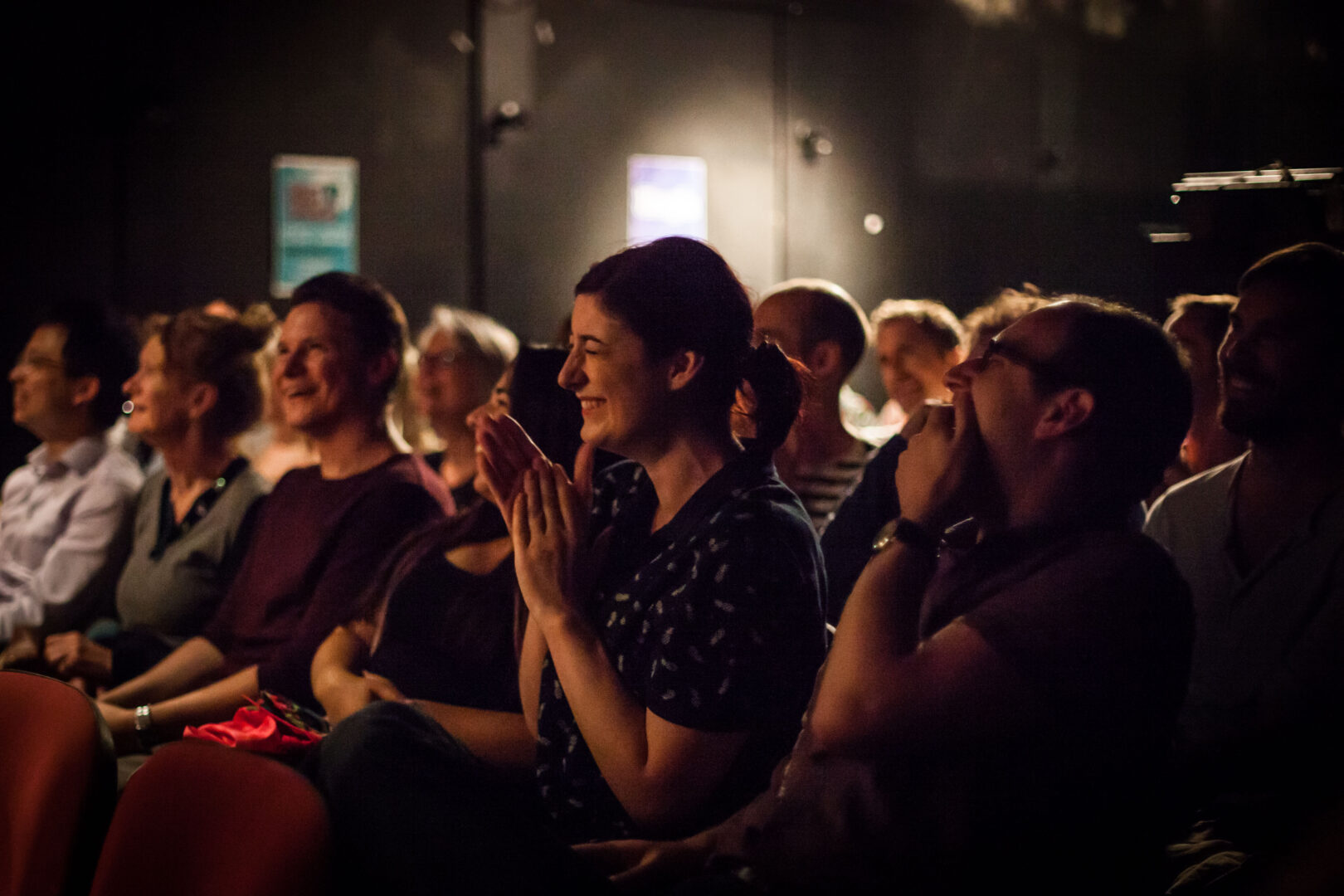
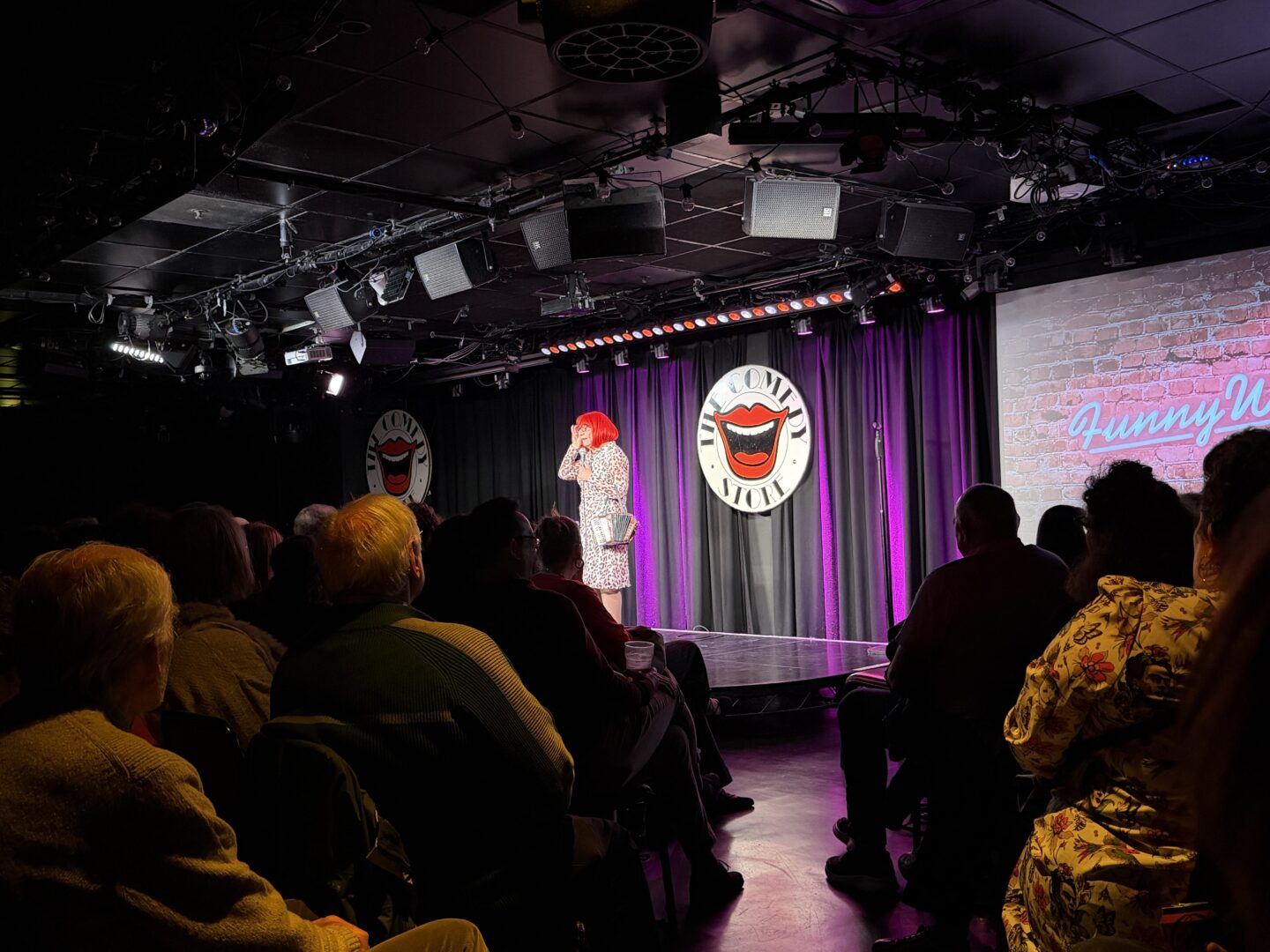
We are very proud to say that the Funny Women Awards is counted among the exhibits, with footage from our 2019 Funny Women Awards Grand Final featured. Curator Joanna Norledge said: “These Awards are a perfect example of women just getting on with being brilliant and refusing to let stereotypes define them. It’s the initiative of women behind these kinds of celebrations, that overturn stereotypes and change the world – making it fairer and funnier for everyone – which is exactly what this exhibition is all about.”

This exhibition and accompanying events programme seek to amplify the voices of those with lived experiences of challenging injustice and campaigning for change.
From personal diaries, banners and protest fashion to subversive literature, film, music and art, women’s voices and stories form the foundation of the exhibition. Highlights include:
- Peitaw, one of a series of tintype self–portraits created by Gambian-British artist Khadija Saye, which was displayed in the Diaspora Pavilion at the Venice Biennale in 2017, where Saye was the youngest exhibitor
- Records of surveillance carried out on Sophia Duleep Singh, one of Queen Victoria’s goddaughters who used her status to support campaigns for women’s suffrage in the UK, alongside her handwritten diary from 1907
- Football boots belonging to Hope Powell, who forged a 20-year playing career and became the first woman to manage England Women in 1998
- Protest poems written on toilet paper in Holloway Prison by Sylvia Pankhurst who was imprisoned for seditious activity in January 1921
- Handwritten manuscript of Sarah Waters’ debut novel Tipping the Velvet, which celebrates lesbian love and sexual diversity
- Travis Alabanza’s self-portrait poster My Stubble has no Gender, which was created in collaboration with Denny Kaulbach to celebrate hair growing on gender non-conforming faces
- Letter to Marie Stopes, who was an influential advocate of birth control and a sex educator, from Mrs Fraser, a working-class woman describing her desperate need for birth control, in 1924
- The first account of the life of a Black woman published in Britain, A History of Mary Prince – related by herself (London, 1831), which was transcribed and edited by white British abolitionists
- No More Page Three campaign t-shirt, which Dr Caroline Lucas MP wore at a debate on media sexism in 2013
- First edition of Jane Austen’s debut novel, Sense and Sensibility, which was anonymously published ‘By a Lady’ in 1811
- A piece of fence wire, which was cut by writer Angela Carter’s friends and sent to her as a present from RAF Greenham Common in Berkshire where they were protesting against nuclear missiles being kept
- Handwritten draft of Middlemarch (1871-72) by Mary Anne Evans, under the pen name George Eliot
- ‘Womanopoly’ board game, created by activist and historian Stella Dadzie, where players experience how luck and misfortune, opportunity and chance are influenced by gender
- One of the founding works of feminist philosophy, Mary Wollstonecraft’s A Vindication of the Rights of Woman, which argues that women should be educated so they can take an active role in shaping society
Recognising that injustice is unequally experienced depending on class, race, gender expression and a whole host of different social positions, Unfinished Business: The Fight for Women’s Rights explores the riveting and unfinished story of women’s struggles to be taken seriously, treated fairly and to change the world for the better.
Dr Polly Russell, lead curator of Unfinished Business: The Fight for Women’s Rights, said: “As the national library of the UK, the British Library has a responsibility to highlight and explore the countless histories and testimonies that can be found within our collections. I have loved working with a range of contemporary activists, thinkers, scholars and leaders to craft an exhibition that connects the current moment of feminist activism and agitation with the history of women’s rights in the UK. Whilst never far from the headlines, women’s rights have taken centre stage over recent months with coronavirus throwing issues such as reproductive rights and domestic violence into sharp relief. This moment reminds us that that women’s rights are, indeed, unfinished business.”
Unfinished Business: The Fight for Women’s Rights is accompanied by:
- Pop-up panel displays drawing on the main themes of the exhibition, which will open in over 20 partner libraries around the UK through the Living Knowledge Network alongside a programme of events and activities hosted online here.
- Digital events that will offer a platform to discuss and debate the issues of the exhibition more broadly, from the lives of Mary Seacole and Sylvia Pankhurst to journalists Gloria Steinem and Zeinab Badawi in conversation
- A ten-episode podcast series that puts contemporary debates around gender and feminism into conversation with the past by drawing from star objects featured in the exhibition
- Free, educational website, which will investigate the history of and activism around women’s rights in the UK, celebrate the work of women across different arenas, and tell historical and contemporary stories of empowerment and overcoming barriers through the British Library’s collections
- A new book edited by Polly Russell and Margaretta Jolly, which features sixteen new essays exploring topics as disparate as gender fluidity, black women’s access to education, and the right to sexual pleasure.
Offering a fresh take on women’s rights, the exhibition is divided into Body, Mind and Voice, with each theme starting with a contemporary activist organisation before exploring the history behind the issues their campaigns tackle. Featuring campaigns by Gal-dem, Bloody Good Period, Now for Northern Ireland, STEMettes, United Voices of the World, Fawcett Society, Women for Refugee Women, Glasgow Women’s Library and LD Comics, the exhibition highlights how women and their allies have fought for equality with passion, imagination, humour and tenacity.
Alongside Unfinished Business: The Fight for Women’s Rights, Khadija Saye’s self-portrait series, Khadija Saye: in this space we breathe, will be on display in the free Entrance Hall Gallery from December 2020 to May 2021. Composed of nine powerfully evocative self-portraits, silk-screen prints by Gambian–British artist Khadija Saye, who was tragically killed in the Grenfell fire of 2017, the series demonstrates Saye’s deep concern with ‘how trauma is embodied in the black experience’, as well as her enduring fascination with Gambian traditions of spirituality.
Unfinished Business: The Fight for Women’s Rights runs from 23 October 2020 to 21 February 2021.