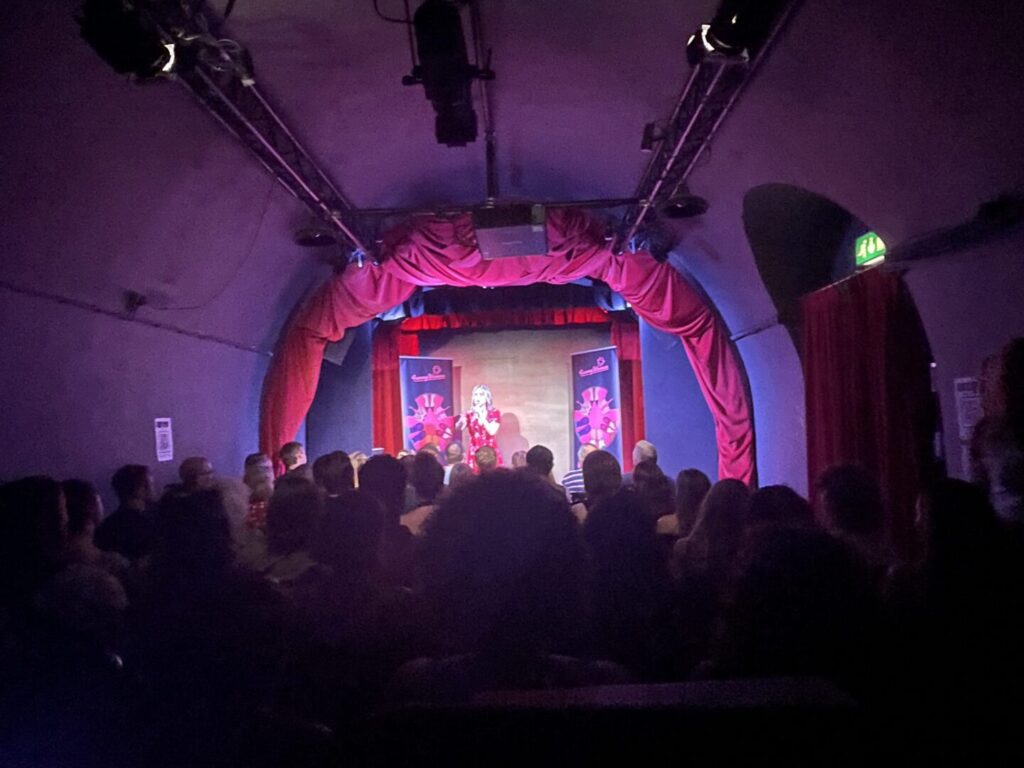
MPs call for live comedy to be recognised as a distinct art form to open up funding access. The unique nature of the live comedy sector must no longer be ignored by Government to allow it to be properly considered for funding alongside other creative industries.
The recommendation from the Culture, Media and Sport Committee comes following an evidence session on live comedy in April, where our Funny Women founder, Lynne Parker, gave evidence as part of the panel. It heard how differences in infrastructure, workforce and audiences, compared with other art forms, has shut off live comedy’s access to funding bodies, including Arts Council England.

In addition to calling for live comedy to be recognised as a distinct art form, the Committee’s letter to DCMS Minister Sir Chris Bryant also makes recommendations to protect the workforce and suggests there is a strong case for the biggest comedy venues, producers and promoters to commit to a voluntary scheme similar to the grassroots music levy.
With the Edinburgh Fringe underway, the Committee also highlights the importance of comedy festivals in providing opportunities for performers and local businesses. It however warns that the unaffordable costs of the Fringe, including for audiences, is restricting participation and reducing the diversity of acts.
The barriers to participation and attendance and the support that governments can provide to events such as the Fringe will form part of the major events inquiry, which was launched by the Committee last month.
Chair of the CMS Committee, Dame Caroline Dinenage MP, said: “The gathering of performers and audiences at the Edinburgh Fringe showcases the tremendous impact live comedy can have on people’s lives and the wider economy. But despite proving its cultural and economic importance across the country, a reluctance to see live comedy as a distinct cultural craft has hampered its access to the funding open to other performing arts.
“It’s time the Government took the first step to helping the live comedy sector continue to deliver the huge benefits it provides by recognising it as a specific art form and properly engaging with the sector. There also needs to be more support for its workforce and a real focus on making sure that participation in and enjoyment of live comedy is something that is open to all.”
The live comedy evidence session was proposed by the Live Comedy Association as part of the Committee’s State of Play inquiry, which invited pitches from across the culture, media and sporting world in order to shine a light on previously unheard issues and challenges.
“We need a cohesive plan of action that brings comedy to the fore as an art form,” says Lynne Parker commenting on the Committee’s letter to the DCMS. “This should include broadcasters, management companies, promoters and producers who depend on those of us working at grassroots to develop and showcase new talent. We can’t do this without funding and government guidelines could be drawn up to encourage more investment across the wider entertainment industry.”
The Committee’s letter made the following conclusions and recommendations:
Recognition of live comedy
Given the economic and social contribution of comedy, and the importance of live comedy as part of this, we support calls for a formal recognition of live comedy as a distinct art form. In practical terms, at a first step this should mean increased engagement by DCMS with the sector and with Arts Council England on how it considers and funds live comedy.
As part of its recognition of live comedy, the Government should work with funding bodies to establish an independent, accurate assessment of the size and distribution of the live comedy sector.
Comedy across the UK
The barriers to participation in and attendance at events such as the Fringe will be part of our scrutiny of our major events inquiry, and we look forward to hearing from the Government on the actions it is taking in this area.
Venues
We hope that the Government shares our view there is a strong case for the biggest venues, producers and promoters to voluntarily mirror the grassroots music levy across all forms of stadium and arena entertainment, including comedy.
Freelancers
The need for a freelance champion is clear and urgent, and we expect DCMS to be working at pace to define and recruit an individual who can reflect the full scope of the creative industries, including live comedy.
Standards
We welcome the Government’s continued commitment to CIISA, including in the Sector Plan and its response to our report into British film and high-end TV, and will continue to monitor the engagement of the creative industries with the work of CIISA.