International Women’s Day (IWD) has been celebrated around the world for over 100 years. It’s a day to acknowledge the achievements of women and to challenge the constructs that hinder them, to champion those who are at the pinnacle of their careers and to fight for equal pay and equal rights where this is still not the case. There have always been public events held in the name of International Women’s Day and for the past few years, the UK has seen comedy gigs become an expected part of those programmes. And this is fantastic, of course it is, I’m a female comedian and there’s nothing I like more than gigs that are interested in booking people like me and reminding the world that women are fantastic. But there are a few aspects of the production and promotion of these shows which I’ve found sometimes fascinating, other times troubling, from the start.
The first is the predictable response to any postings calling for women to take part in an IWD comedy show is usually an immediate wisecrack from a male comedian about whether they could be considered if they are willing to wear a skirt/put on a wig/wear make up for the occasion. Yawn. This is generally followed by someone asking why there isn’t an International Men’s Day (it’s 19th November, as well as all of the other days). Oy vey, the patriarchy. I’m not going to discuss this further as it’s robustly dealt with by Richard Herring, who uses the opportunity to educate men on the subject to raise money each year for Refuge.
But the element that raises the most eyebrows, in my opinion, is money. If you search through the callouts for IWD events on the main comedy industry social media forums, there are a few phrases that jump out at you over and over.
“No fee, obvs, as it’s for International Women’s Day”
“Unpaid, although we are hoping to cover some travel”
“No budget for this, but we will pay you in Prosecco”
Why is it “Obvs”? If they can’t cover all of the travel, can we simply do the gig once we reach as far as we can get on the journey before running out of expenses? How much Prosecco will they pay me and will my landlord accept it in lieu of rent?
I’ve also noticed that lots of comedy shows connected to IWD will have a charitable cause attached, whether they are run by a charity itself or an open mic night above a pub. I sometimes wonder if there’s a slightly different slant to that though, perhaps, maybe, possibly, which is the idea that you need to hitch your women-only lineup wagon to a charity as they might not be enough of a draw in and of themselves?
Many promoters love to link the odd night to something else, especially if it means that they can be seen to champion diversity – I’m not sure that counts in this case though, as female comedy is not a genre and being female is not in and of itself diverse as we are 50% of the population. A female comic is not a novelty act (unless she is an actual novelty act). I’m not sure booking a woman as MC will automatically qualify your gig for a big Arts Council grant.
I have nothing against charity gigs, I run lots of them, but if you’re booking acts at a level where they are likely to successfully raise money for you then you should be able to pay them for their time and expertise. They can always choose to donate their fee if they feel the inclination. The entertainment should be part of your budget in the same way that the venue, food, drink and other costs are factored in. Alternatively, you could put the word out that you’re looking for someone with a specific connection to that charitable focus who may wish to donate their time. But that’s not what I’m talking about here, nor am I talking about open mic nights which choose a theme for newer acts to boost opportunities to develop.
What I’m saying is, a lot of promoters want to support IWD by asking women to work for nothing. Even though the fight for equal pay is one of the issues that IWD was born out of. Let me give you an example. There was one such post on a Facebook group last week, looking for a number of acts for a fundraiser in honour of IWD for the local branch of a very established, highly financially supported women’s association. I asked if there was a fee for the acts and the response was: “A very good question, and thank you for asking. Unfortunately there isn’t a fee.” As you can imagine, it was lovely to have my question validated.
I replied “Perhaps it’s worth taking that back to the organiser, because it’s a bit shameful not to even offer expenses. It may be worth seeing if there is a local business sympathetic to your cause who would be interested in sponsoring this side of your event. It doesn’t need to be huge fees and a Live at the Apollo star. Just something respectful that means you’re not celebrating International Women’s Day by further hampering the progress of women!” A number of other comics, both men and women, made similar comments and in fairness, the promoter said “I’m very happy to. If I receive any updates I’ll post an update.” Then later “I’ve passed on the suggestions re: fees and expenses. These are all fair points.” This was a very positive and constructive conversation. It was a teaching moment.
The expenses aspect, by the way, is kind of a big deal. Without it, an unpaid gig becomes one that actually costs the performer money because of things like travel, childcare, turning down subsequent offers of paid work because they have made a commitment to this one. It means that performing at charity events without expenses can become the realm of the privileged, you may truly wish to support that cause but you’re at a disadvantage because you’re unable to afford the fare. Of course, it’s each comedian’s choice to accept that gig but surely, if at all possible, expenses should be offered by a promoter in order to prevent the person who is providing the entertainment for their audience from essentially paying to do so. Anyway, back to the Facebook chat…
At the risk of sounding like clickbait, you’ll never believe what happened next!
Immediately below this visible, public discussion, women began to put themselves forward for this gig. Not only that, but some people also tagged women they thought should apply. The promoter had yet to share the reaction of the organisation they were booking for, so this was still an unpaid, expense-free commitment. Everyone could see that the lack of fees had been challenged, that the poster was interested in trying to explore amending this, and they undermined the conversation and nullified that process by proving that it’s unnecessary to pay women in this instance. I say nullified, and I mean stuck two fingers up at the idea.
I totally understand that newer acts want stage time and opportunities to perform, but proper charity gigs can also be really tough and usually require a level of experience, especially if tickets are sold so the audience’s expectations will be higher. However, market forces dictate that if people will work for free at an event that should offer a fee, the gender pay gap will never be closed. When new acts want to move into paid work, that paid work will need to exist and it will only be there if we speak up when it isn’t.
This has got a bit ranty. Am I making a fuss about nothing? My upbringing says I should apologise for that. I’m not sorry though. We do ourselves a big disservice when we join in a race to the bottom. Many of us are fighting for more and better and equal opportunities for women in comedy, and for recognition that good comedians are good comedians and should be booked and paid accordingly. We need to acknowledge that there were women who went before us and paved the way for us to have the opportunity to use our voices to speak truth to power and to entertain audiences. And on International Women’s Day we need to encourage venues, promoters and our peers to make positive decisions that celebrate our contribution without exploiting our goodwill. We can’t ask the Funny Men to be our allies if the Funny Women don’t buy into this themselves.
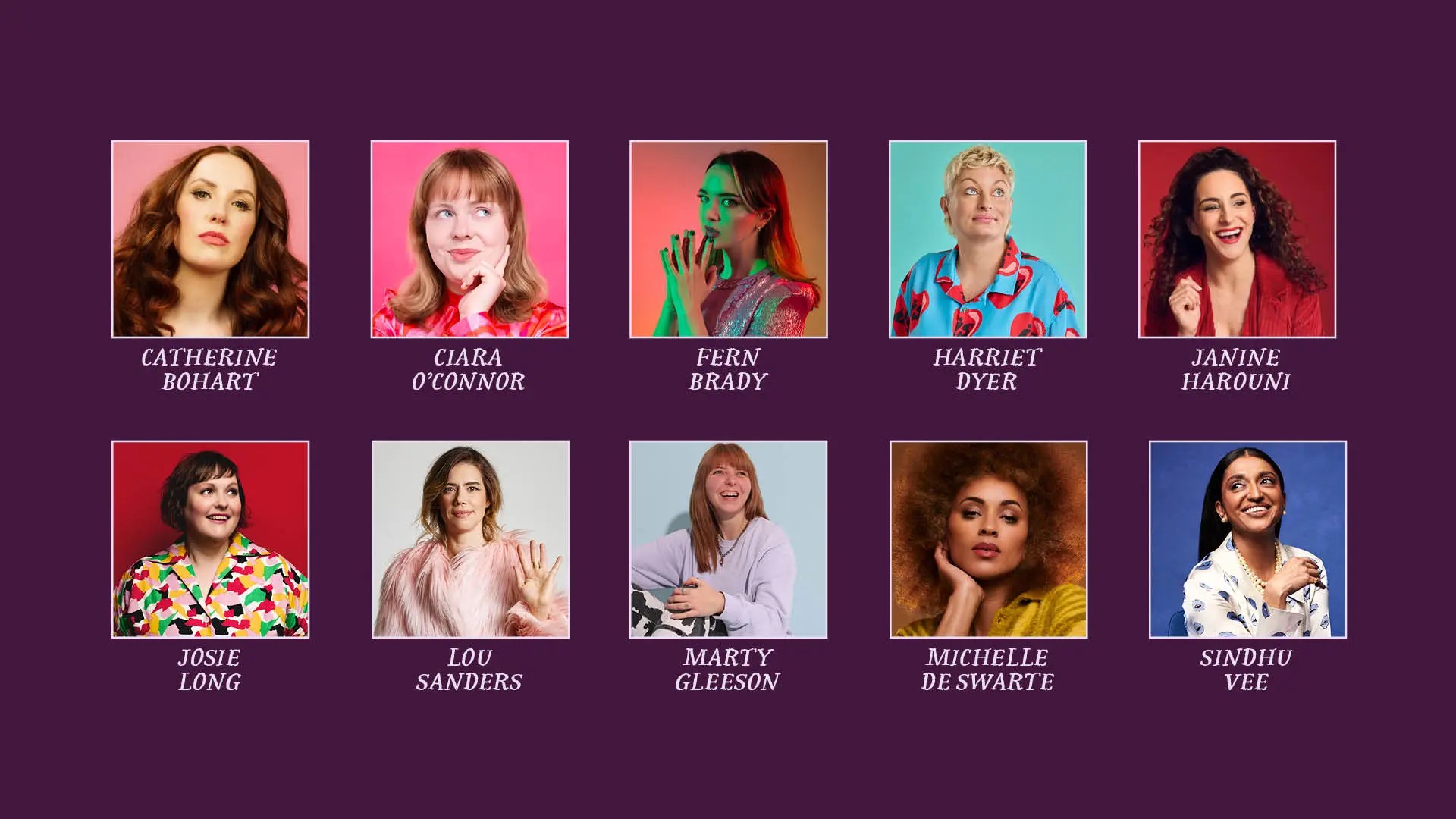
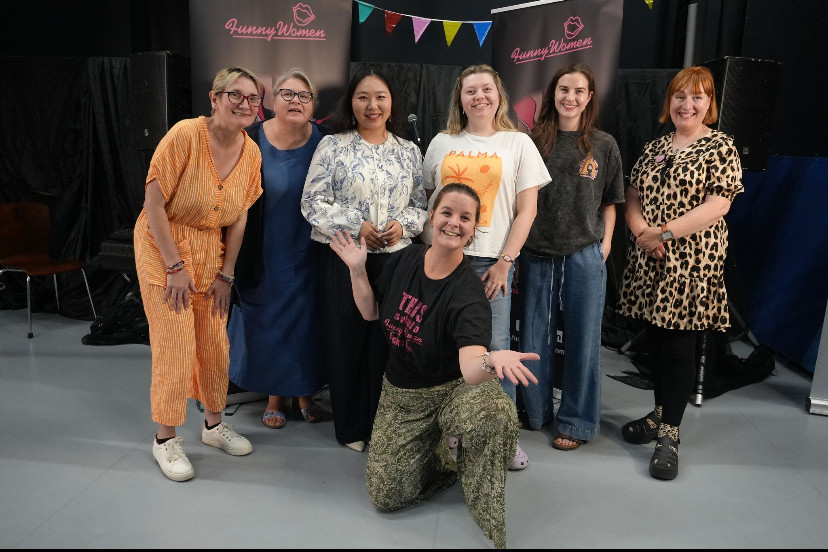
Funny Women will be celebrating International Women’s Day in London at the WOW Festival and Manchester at the Frog and Bucket!